
Building Useful Quantum Computers: Constraints, Customers, and the Two Religions of Quantum
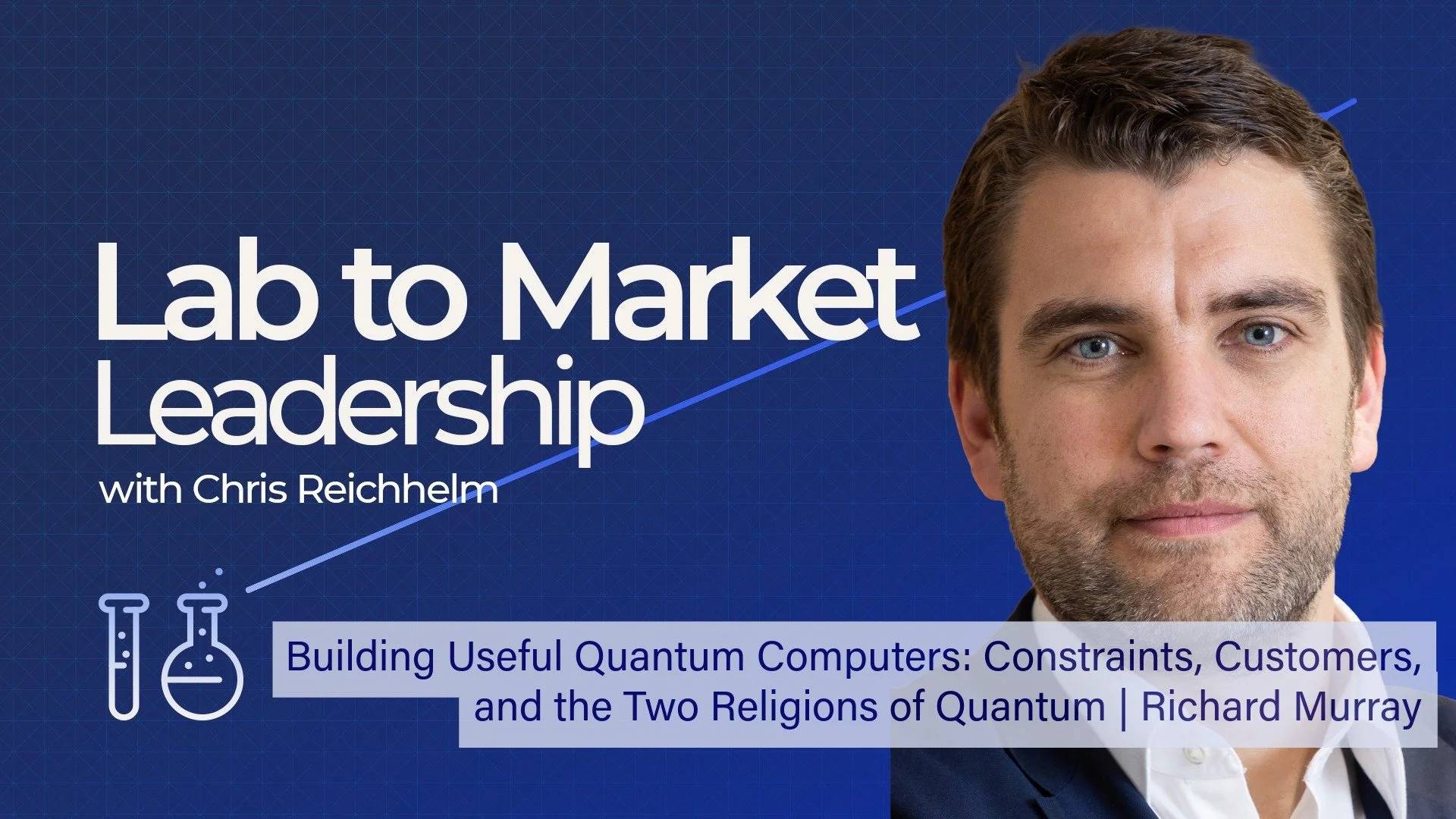
Richard Murray | Co-founder and CEO, Orca Computing
Podcast Episode Description:
Does pursuing the ultimate technical goal guarantee Deep Tech success? Or do the real breakthroughs happen in the compromises?
Richard Murray, co-founder and CEO of Orca Computing, has spent six years navigating this tension. His University of Oxford spinout develops photonic quantum computers that look like normal server racks, integrate seamlessly into data centres, and deliver measurable improvements to today’s AI workloads. No golden chandeliers. No 15-year wait for fault tolerance.
Starting with just £1.5 million forced creative decisions. One light source instead of dozens. Resource limitation became commercial advantage.
Richard describes the ‘two religions’ of quantum computing. The first believes in large-scale fault tolerance - billion-pound systems solving humanity’s hardest problems. The second focuses on immediate commercial usefulness. Orca chose the latter. Competing with Google on the same path but £990 million poorer guarantees failure.
Their generative AI work demonstrates this focus: fewer GPUs needed, reduced energy consumption, more expressive AI models. Specific value propositions, not vague promises.
The talent challenge? You cannot recruit people with ten years of quantum computing industry experience because the industry hasn’t existed that long. Success requires recruiting for ‘comfortable with ambiguity’ rather than pure technical brilliance. Training isn’t hard for brilliant physicists - helping them understand why customer feedback matters more than technical perfection is.
Richard’s most provocative insight: Goldman Sachs defines ‘quantum advantage’ as when a company invests straight off their balance sheet because they can define the business return. Not qubits or error rates - commercial decisions based on value.
For Deep Tech founders navigating similar journeys, this offers essential perspective. The tension between technical ambition and commercial reality determines which companies survive the journey from laboratory breakthrough to market-ready business.
Subscribe to our technology leadership podcast on YouTube or wherever you get your podcasts to stay updated on the latest insights from Deep Tech innovators.
To learn more about Lab-to-Market Leadership, view our presentation: ‘The Lab-to-Market Journey – a Blueprint.’
Additionally, learn about our work with Chief Executive Officers.
This episode of the Lab to Market Leadership podcast was produced by Beauxhaus.
